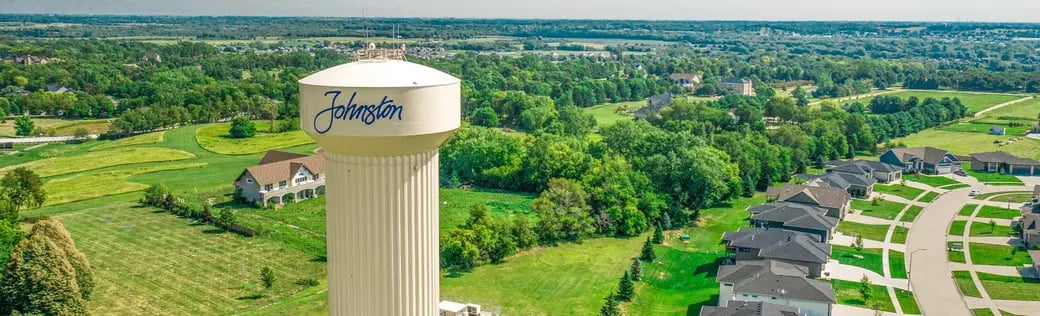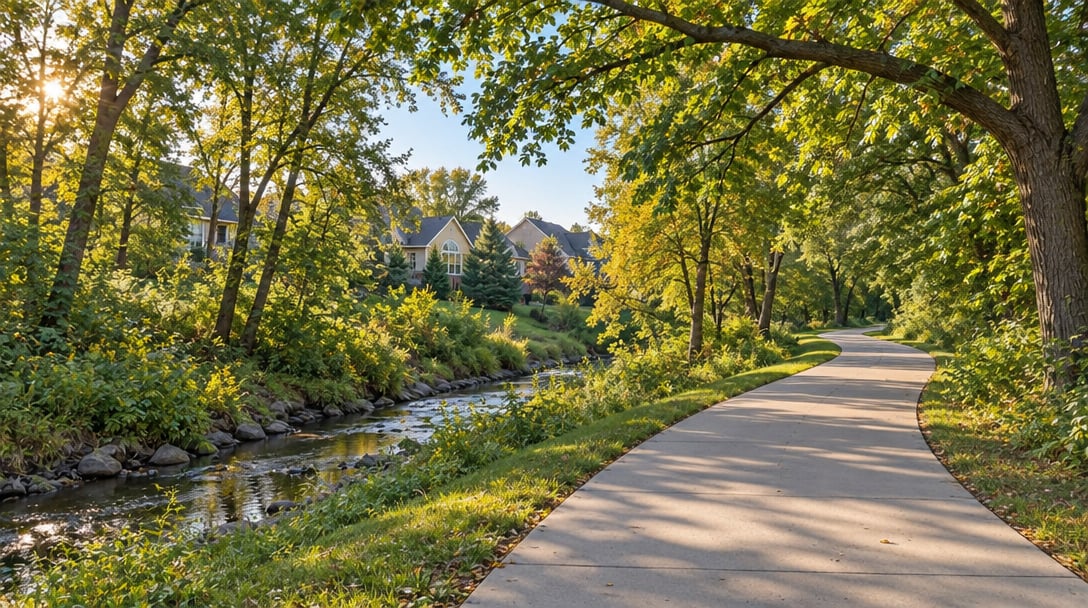
I grew up in Urbandale and live in Johnston, and the reason I ended up here isn't complicated. I can walk out my door and be on a trail in a few minutes. That is a Tuesday thing, not a weekend thing, and it changes how a house fits your life.
The move-up clients I work with are often solving for exactly that. They have outgrown the home they bought as first-timers, and they want the next one to work better on an ordinary evening. Trail access is one of the few upgrades you cannot renovate into a house later. The lot either sits near it or it does not.
Let's run the numbers first, as always. Then walk the trails.
WHY TRAIL ACCESS HOLDS VALUE
A trail is fixed infrastructure. It will not be rezoned, it will not be built over, and it does not depend on a developer's plan. That permanence is what shows up at resale.
The value is not in the trail itself. It is in what the trail protects: mature trees along the corridor, a buffer from through traffic, and a reason for the neighborhoods around it to keep their lots and their canopy intact.
THE TRAILS, BY TOWN
Here is what is actually on the ground in the communities I work.
| Community | Trail access | Detail |
- Waukee
- Kettlestone trailhead on the Raccoon River Valley Trail - An 89-mile trail, per the City of Waukee
- Clive
- Clive Greenbelt Trail - Roughly 8 miles along the creek, linked to Waukee's trails, per TrailLink
- West Des Moines
- Jordan Creek Trail - Links neighborhoods to shopping and recreation, per TrailLink
- Johnston
- Terra Park and Saylorville Lake - 200-acre park with an 8-acre fishing lake
Those four describe different kinds of outdoor access, and the difference matters when you are choosing a street. Waukee and Clive give you a long connected corridor, the kind you can ride for an afternoon. West Des Moines links the trail into errands, which is useful in a way that is hard to explain until you have done it. Johnston pairs trails with water, which is its own draw.
WHAT BACKING TO A TRAIL IS ACTUALLY WORTH
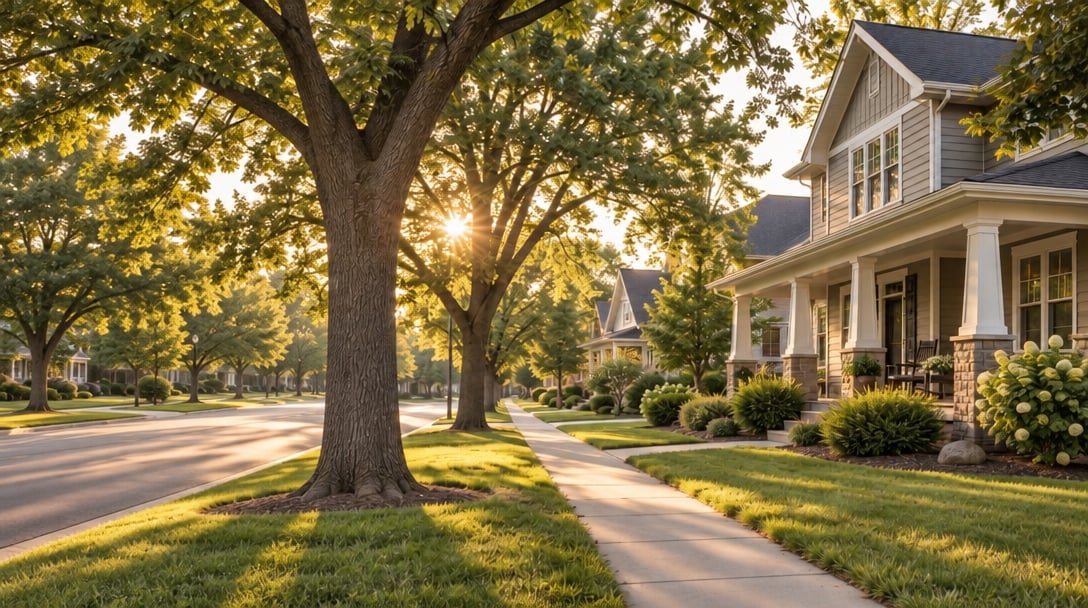
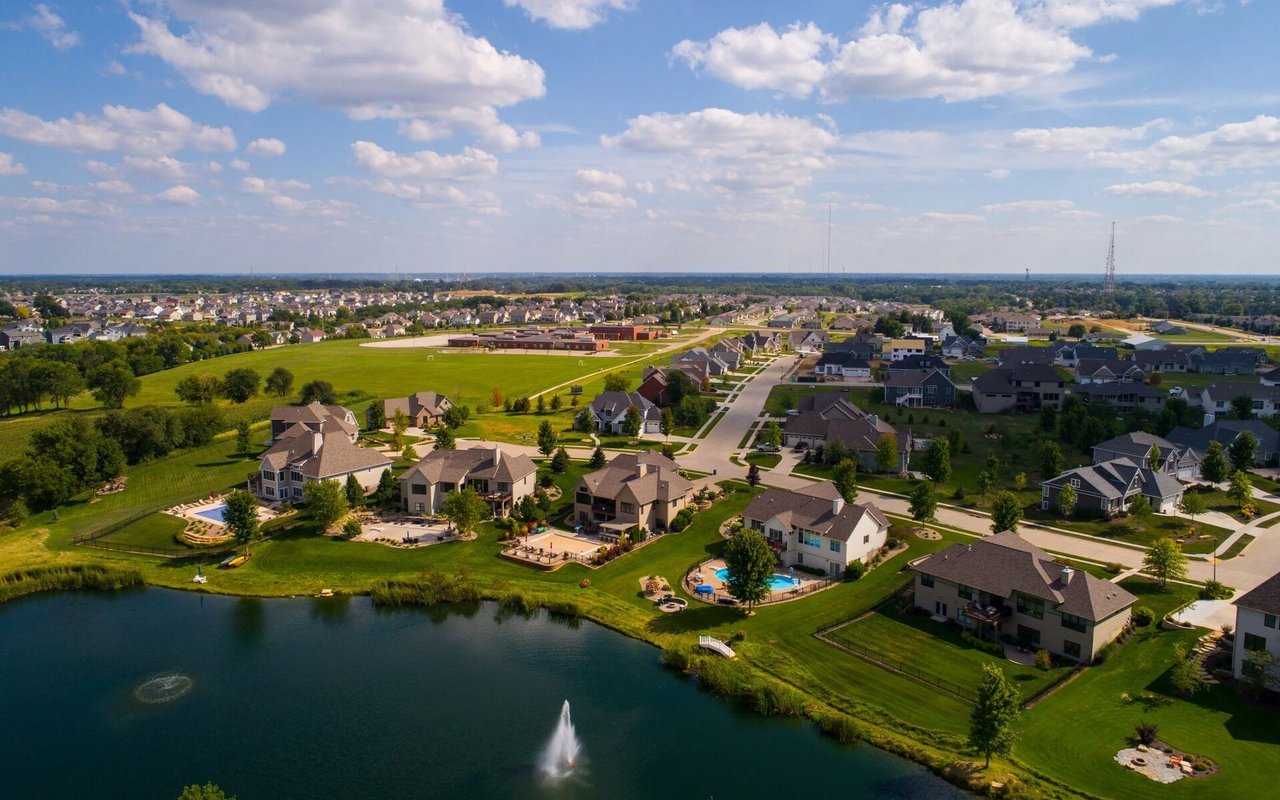
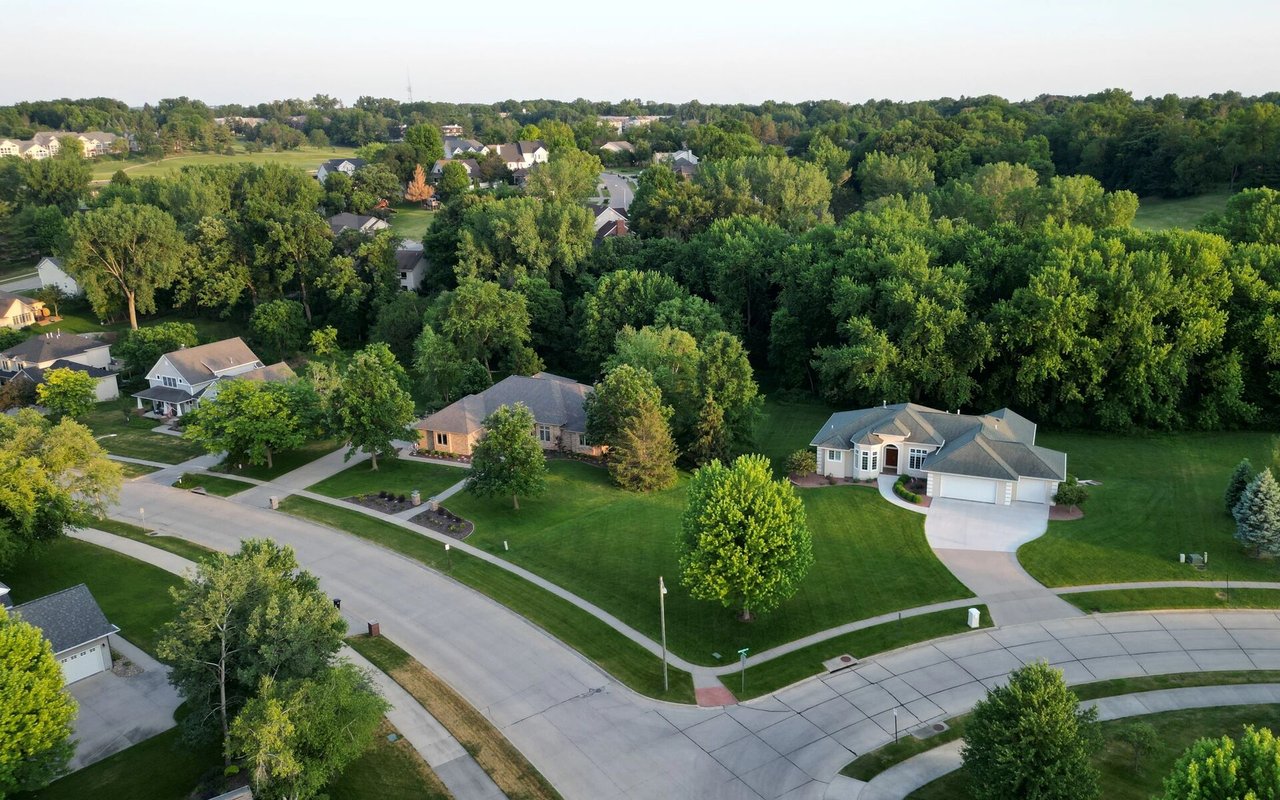
A lot that backs to a trail corridor usually has something a lot on an interior street does not: depth, canopy, and no house directly behind it. Buyers notice the quiet before they notice anything else, and that quiet is what holds up when it is time to sell.
What you are buying is the lot and the setting. A wooded corridor behind the property line, mature trees inside it, and a short walk to pavement that takes you somewhere. That is the whole proposition, and on the right street it is worth real money.
WHAT TO CHECK BEFORE YOU BUY ON A TRAIL
This is where I slow clients down, because trail-adjacent lots have their own list.
- Easements and ownership. The trail corridor may be a city or county easement crossing or bordering the lot. Know who owns the strip and what they can do with it before you write an offer, and pull the plat rather than trusting the listing.
- Drainage. Creeks, corridors, and paved paths move water. See where it goes in a hard rain, and look for signs in the basement or at the foundation.
- Maintenance responsibility. Find out who maintains the corridor, the fence line, and the boundary landscaping. Sometimes it is the city, sometimes it is you.
- Fencing and access rules. Not every trail-adjacent lot allows the fence or the gate you have in mind. Check the rules before you plan the yard around it.
- Foot traffic. A trail that runs right past a back patio feels different from one twenty feet beyond a tree line. Walk the lot at a busy hour, not at 11 am on a Tuesday.
None of these are deal-breakers. They are just items that cost money if you find them after closing instead of before.
THE TRADE-OFFS, HONESTLY
Trail-adjacent lots usually trade a little privacy for access, and some streets make that trade better than others.
If you want the deepest buffer and the most canopy, look at the older corridors, where the trees were planted decades ago, and the lots were platted with depth. If you want a newer home, some newer subdivisions put the trail along the edge of the neighborhood, giving you access with more separation from the path itself. And if you want the trail for long rides rather than short walks, the connected corridors in Waukee and Clive are the ones that go somewhere.
There is also a version of this that does not involve backing to anything. Some of my clients choose a house a few streets in, with the trail a short walk away and no boundary issues. That is often the smarter buy, and it is the one people overlook.
THE THREE WORRIES, ANSWERED
Every move-up client I work with carries the same three questions. Here is how they land when trails are part of the search.
Can we afford it? Trail-adjacent lots carry a premium in most of these neighborhoods, so the honest version of this question is what that premium costs you per month. We value your current home first, so we know what the premium actually is in your budget rather than in the abstract.
Buy first or sell first? Trail-side homes move when they are right, and the inventory is thin, because trails only run along so many streets. That argues for having your numbers ready and being able to act, which is a different thing from being in a hurry.
What if our house sells fast and we have nowhere to go? This is the question that keeps people from even looking, and it is the most solvable one. We build a place to land in the timeline before your home goes live, whether that is a rent-back or a short-term rental. Two closings and one moving truck is the plan we are working toward.
HOW I'D SHOP IT
My process is the same whether you want a trail lot or not.
We value your current home honestly, not at a number designed to win your listing. We agree on a payment you are comfortable with. Then we look at three or four specific pockets rather than three towns, and we map trail access on each one, on foot and by bike where it matters. From there, we shortlist the streets that give you access without the boundary problems.
I spent twenty years working on positioning and pricing strategy for large brands before I ever listed a house. The same discipline applies here: know what you are actually buying, know what it is worth, and don't pay for a feature you haven't checked.
NEXT STEP
If trail access is on your list for the next home, the most useful first step is not a showing. It is a short conversation about what your current home is worth and what that buys you on the streets that actually connect.
Curious what your current home would sell for? Start at peterjonesrealty.com/home-valuation. Or grab 20 minutes on my calendar at calendly.com/peterwjonesrealtor, or call or text 515-585-9849, and we'll run your numbers together.
No pressure. Just the numbers, in plain language, from someone who grew up in Urbandale and lives in Johnston.